Most companies dread customer complaints.
But top-performing businesses treat them like gold.
Complaints aren't just problems to fix. They're real-time feedback from the people who care enough to say something. And that matters, because only 1 in 26 unhappy customers ever complains. The rest leave without a word. In fact, 85% of churn is caused by poor service, not price or product.
Done right, complaint handling becomes your greatest retention tool. Customers whose issues are resolved quickly are more loyal, spend more, and tell others.
Complaints don't just reveal what's broken. They show you exactly how to get better, faster.
The problem: Most companies treat complaints as a reputation risk and try to minimise them.
The solution: Build a complaint-handling system that turns customer feedback into loyalty and insight.
The proof: Only 1 in 26 unhappy customers complain. The rest leave silently. 85% of churn is caused by poor service, not price or product. The customers who complain are the ones giving you a second chance.
From feedback to insight: how to decode customer complaints
Every complaint contains a clue. But unless you track and analyse those signals, they're easy to miss and impossible to fix.
That's where complaint analysis comes in. It's the process of capturing, categorising, and understanding what customers are telling you, so you can spot patterns, address root causes, and improve the customer experience over time.
Start by asking:
- Is this the first time we've heard this issue?
- How often does it occur?
- Is it tied to a specific product, feature, or channel?
- Has this customer raised similar concerns before?
Use this context to move from reactive to proactive. If several customers report the same issue, it may signal a deeper product or process flaw. If you're working on a fix, a proactive update can ease frustration and build trust.
Brands that actively collect and analyse customer feedback grow revenue 10x faster than those that don't.
This connects directly to why quality data underpins any good service strategy, the same discipline that makes AI useful makes complaint analysis reliable.
Pro tip: Use your CRM to log every complaint on the customer record. This gives agents full context and lets managers pull reports to identify recurring themes.
Build a consistent customer complaint resolution process
A single complaint might be random. But a pattern of them? That's insight in disguise.
To act effectively, your team needs a system, not just good intentions. That means setting up a clear complaint-handling framework to ensure every issue is captured, routed, and resolved consistently.
A strong customer complaint resolution process helps you:
- Respond faster and more reliably
- Eliminate internal confusion or blame-shifting
- Track resolution progress across teams
- Reinforce trust and transparency with customers
A well-structured process should define:
- Where complaints are received: Email, chat, CRM forms, or social media
- Who owns the resolution: Defined roles for each stage of the process
- Response timelines: Set expectations for first reply and resolution
- Escalation paths: What to do if the issue isn't resolved on the first try
- Closure criteria: When and how a case is officially marked complete
Don't wait for someone to guess the next step. Map your complaint resolution workflow directly into your CRM, so ownership, deadlines, and status updates are always clear.
With SuperOffice Service, you can assign complaint owners, set SLAs, and track every step of the resolution process in one place. It's also worth reading how a CRM helps you track sales activities, the same principles of ownership and visibility apply directly to service workflows.
7 ways to turn complaints into customer loyalty
Handled well, a customer complaint isn't just a fire to put out. It's a chance to earn trust and deepen loyalty. Here are seven proven strategies to turn frustration into confidence and build stronger customer relationships.
1. Listen fully before you act
Before solving anything, listen. Research shows that customers value being heard even more than getting a fast solution. Make space for them to share, ask clarifying questions, and avoid jumping to conclusions.
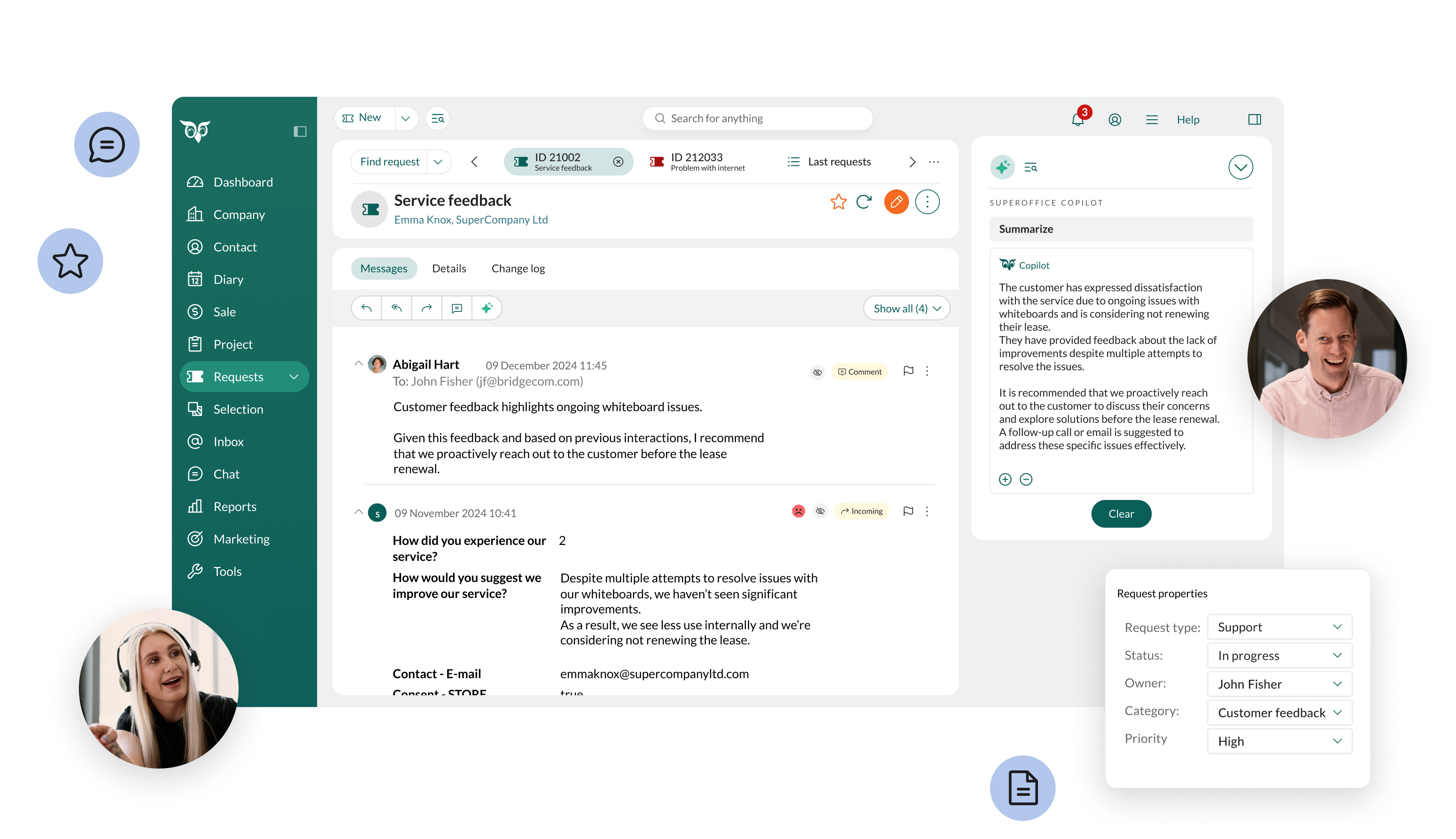
Tip: Log emotional tone and context using CRM notes. With SuperOffice Service, every agent sees the full history and sentiment in one view.
2. Keep the right teams in the loop
Most complaints don't stop at support. They reveal issues across product, pricing, or process. Sharing them with other departments creates feedback loops that lead to lasting fixes.
Tip: Use tags or auto-routing in SuperOffice CRM to alert sales, product, or operations when their input is needed.
3. Apologise authentically
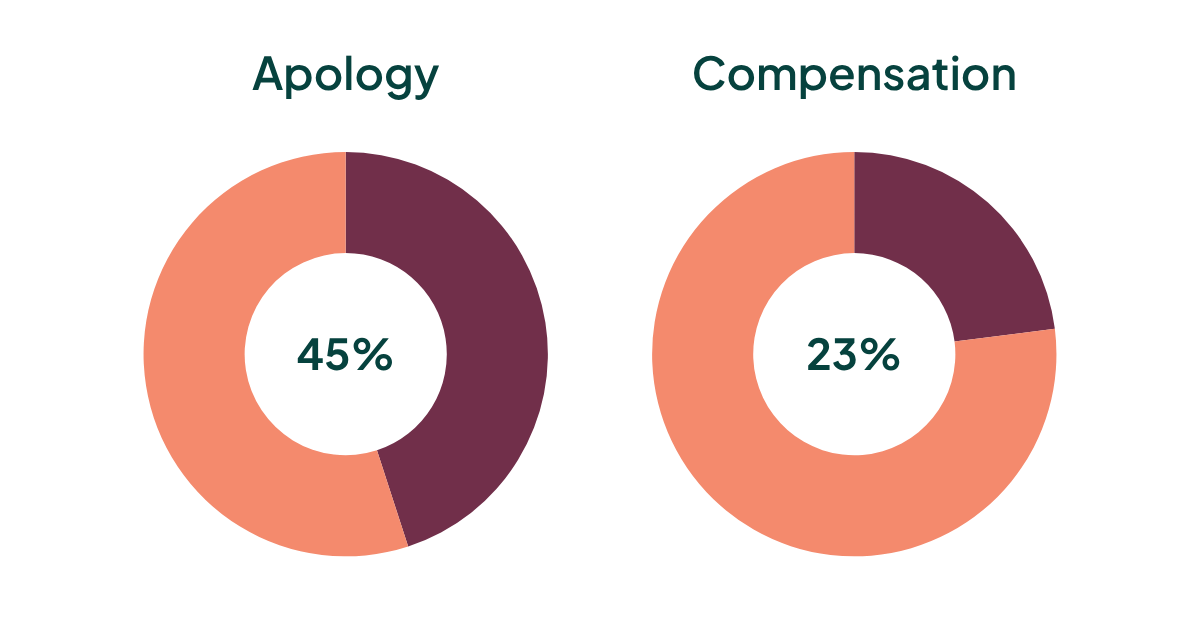
A genuine "we're sorry" carries more weight than a scripted response or credit note. In fact, 45% of customers forgive a company after a sincere apology, compared to just 23% when offered compensation. Own the issue. Be human. That's what customers remember.
4. Empower agents to resolve, not escalate
Don't make customers wait for approvals or bounce between reps. Equip frontline staff with tools, training, and authority to fix common issues on the spot.
With SuperOffice workflows, agents get guided steps and suggested responses, so they resolve faster and with more confidence.
5. Capture feedback and use it
Every complaint is a data point. Track patterns by tagging issue types and logging root causes. Are multiple people flagging the same thing? That's your roadmap for improvement.
This is where centralising your customer data pays off, when every complaint is logged against a single customer record, patterns emerge that siloed systems simply can't show you.
6. Follow up to close the loop
Once resolved, follow up. Ask if the customer is satisfied and whether there's anything else they need. It shows you care and keeps the door open for future conversations.
Set reminders or trigger post-resolution surveys in SuperOffice to stay connected.
7. Exceed expectations with a thoughtful touch
Resolution is good. A small extra gesture is better. A discount, a handwritten note, or early access to a feature turns a negative moment into a standout memory.
Customers don't expect perfection, but they do remember how you made them feel.
Customer recovery strategy: a five-step playbook
A complaint isn't just a problem to fix. It's a pivotal moment. Handled well, it can restore trust, repair relationships, and increase lifetime value.
A clear customer recovery strategy ensures your team responds with speed, empathy, and impact every time.
Step 1: Respond fast, with clarity and care
Don't keep customers waiting or guessing. Acknowledge their concern, show empathy, and set clear expectations.
"Thanks for reaching out. This isn't the experience we want for you. I've flagged this for review and will follow up within 24 hours."
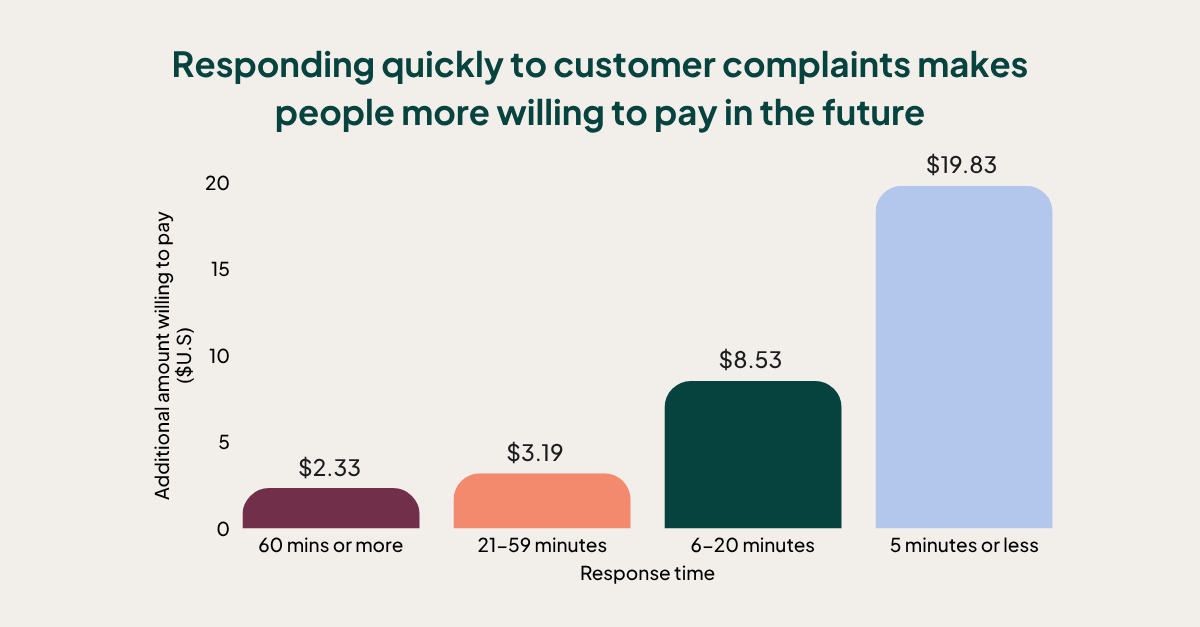
Customers who have complaints resolved within five minutes are willing to spend more on future purchases.
Step 2: Assign a clear owner
Every complaint should have a single point of accountability. When someone owns the resolution, nothing gets dropped and customers feel taken care of. In SuperOffice, you can auto-assign complaints by type, urgency, or channel.
Step 3: Log, categorise, and track the issue
Don't just fix it. Learn from it. Use categories, tags, and notes to track trends over time. Are certain product features or channels showing up repeatedly? That's your signal to dig deeper.
Step 4: Fix the root cause
It's tempting to patch things up and move on. But lasting loyalty comes from solving the real issue. Ask: why did this happen? What process or communication broke down? What needs to change? Document internal actions in CRM notes and share takeaways in team post-mortems.
Step 5: Follow up thoughtfully
Don't disappear after the fix. A quick follow-up, 24 to 72 hours later, shows the customer that you genuinely care.
"Just checking in to see if everything's working as expected. We appreciate your feedback and want to make sure we've made things right."
Handle complaints proactively, not just reactively
Most customers won't tell you when something's wrong. They'll just disappear.
Most unhappy customers never complain directly.

That's why reactive service alone isn't enough. The best teams combine listening, data, and proactive outreach to catch issues early, before they become public or permanent.
Understanding why customers complain in the first place is the first step to building a service model that prevents problems from repeating.
Monitor where customers talk
Not all feedback arrives in your inbox. Keep a pulse on public channels where frustration often surfaces first: Google, G2, or Trustpilot reviews; LinkedIn or X mentions; Facebook comments; Reddit threads or industry forums.
Tip: Tag the origin of each complaint in your CRM to track which channels generate the most customer issues.
Build a “red flag” feedback loop
When someone spots a negative comment, there should be a clear process to flag and act on it fast. Route social or third-party complaints to your service team, escalate critical issues to product, billing, or leadership, and log every case in your CRM — even if it came from outside the usual support channels.
Watch for silent churn signals
Some complaints aren't spoken. They're behavioural. Use CRM and product data to monitor: decline in product usage, missed calls or unanswered follow-ups, and fewer logins or feature interactions.
85% of churn is driven by poor service, not price or product. In SuperOffice, you can set up alerts when key activity drops off, so you can re-engage before it's too late.
Respond publicly, resolve privately
When complaints show up publicly, your response is on display. Respond within hours to acknowledge the issue, then move the resolution to a private channel. After resolution, follow up publicly with a brief thank-you. This shows accountability, protects customer privacy, and builds brand credibility.
Turn feedback into actionable insights
Recurring complaints are product insights in disguise. Tag and categorise each one, share summaries monthly with product, design, and CX teams, and look for fixes that prevent future frustration.
If you're using AI tools to surface those patterns, quality data is what makes that possible — the same discipline applies whether you're running reports manually or letting Copilot do the heavy lifting.
Turn complaints into loyalty (and growth)
No business is complaint-free. But the best ones don't fear customer complaints. They learn from them.
Handled well, complaints lead to smarter product decisions, stronger customer relationships, and higher retention.
Handled poorly, they lead to silent churn, damaged reputation, and lost growth.
The difference is a clear, consistent system for capturing, resolving, and learning from every issue no matter where it comes from. That's exactly what SuperOffice Service is built for.
With SuperOffice Service, you can:
- Centralize every customer conversation across email, chat, and social
- Route issues automatically to the right team or owner
- Track complaint trends, resolution times, and recurring root causes
- Keep full context on every customer, from first touch to final follow-up
Turn every complaint into a reason to stay
SuperOffice Service gives your team one place to log, assign, and resolve customer issues, so nothing falls through the cracks and every customer feels heard.
FAQ: Customer complaints
Start by listening fully before you try to fix anything. Log the complaint against the customer's record in your CRM, assign a clear owner, and set a realistic resolution timeline. Follow up after the case is closed to confirm the customer is satisfied. The key is having a consistent process — not relying on individual agents to figure it out each time.
A complaint resolution process is a defined set of steps your team follows every time a complaint comes in — from first acknowledgement through to root-cause fix and follow-up. It covers who receives the complaint, who owns it, what the response timeline is, and when a case can be officially closed.
Complaints reveal problems you might not otherwise discover. Most unhappy customers leave without saying anything — 85% of churn is driven by poor service, not price or product. The ones who do complain are giving you a valuable opportunity to fix the issue and retain their business.
Feedback is any opinion a customer shares, positive or negative. A complaint is specifically an expression of dissatisfaction that expects a resolution. Both are valuable, but complaints require a structured response process to ensure the customer feels heard and the issue is properly resolved.
Best practice is to acknowledge a complaint within a few hours and aim to resolve it within one business day where possible. Setting clear SLAs in your CRM helps teams stay consistent and keeps customers informed throughout the process.
A customer recovery strategy is a planned approach to restoring trust after something has gone wrong. It typically includes a fast acknowledgement, a clear owner, root-cause resolution, and a follow-up check-in. Done well, it can turn a dissatisfied customer into one of your most loyal ones.